 English
 Vietnamese
 Italian
 Spanish
 Thai
Thai Japanese
 Portuguese
 Korean
 Russian
 French
 German
 Polish
 Indonesian
Why Common Mode Inductor Selection Is Becoming More Engineering Driven
For many years, selecting a Common Mode Inductor was a relatively straightforward task. Equipment manufacturers either referenced an existing bill of materials, copied a previously qualified component, or provided a physical sample for the supplier to reproduce. As long as the inductance value, current rating, and dimensions were similar, the project could usually move forward without major engineering adjustments.
That approach is rapidly becoming outdated.
Across industrial automation, renewable energy, automotive electronics, communication equipment, medical devices, and intelligent manufacturing systems, electronic products are evolving at a much faster pace than ever before. PCB layouts are becoming more compact, switching frequencies continue to increase, power density is improving, and EMC requirements are becoming increasingly strict. In many new projects, there is no existing component available to copy because the product itself is completely new.
As a result, engineers are no longer asking suppliers, “Can you manufacture this inductor?” Instead, they are asking a much more challenging question:
“Can you help us design the right inductor for this application?”
This shift reflects a broader transformation in the electronics industry. Magnetic component suppliers are becoming engineering partners, participating much earlier in product development and contributing expertise in magnetic design, material selection, manufacturing optimization, and production consistency.
For companies specializing in products such as Gujing Common Mode Inductor, Gujing Power Inductor, Gujing Through-hole Inductor, Gujing SMD Inductor, and Gujing Custom Inductor, this trend represents far more than a change in purchasing behavior. It demonstrates that successful magnetic component manufacturing increasingly depends on engineering capability rather than simple production capacity.
China’s Manufacturing Upgrade Is Reshaping Magnetic Component Development
The transformation taking place in inductor selection is closely connected with the broader evolution of China’s manufacturing industry.
A decade ago, many factories primarily produced components according to customer drawings or physical samples. The supplier’s responsibility focused on reproducing an existing product with acceptable quality and competitive lead times.
Today’s manufacturing environment is fundamentally different.
Industrial equipment, energy storage systems, EV chargers, communication infrastructure, AI servers, robotics, and smart control devices all demand customized electronic solutions. Product life cycles are shorter, while expectations for reliability and efficiency continue to increase.
Instead of requesting a replacement component, engineers now provide information such as:
· PCB layout files
· Mechanical space limitations
· Controller IC specifications
· Switching frequency
· Operating temperature
· Rated current
· EMC testing requirements
· Thermal performance targets
These parameters become the starting point for magnetic component design.
Rather than selecting a standard catalog product, engineers work backward from the system requirements to determine the most suitable magnetic solution.
This represents one of the biggest changes in today’s electronics industry.
Instead of manufacturing a predefined component, an experienced Gujing Inductor engineering team may participate in product development before the first prototype PCB has even been assembled.
That level of collaboration helps reduce redesign cycles while improving overall system performance.
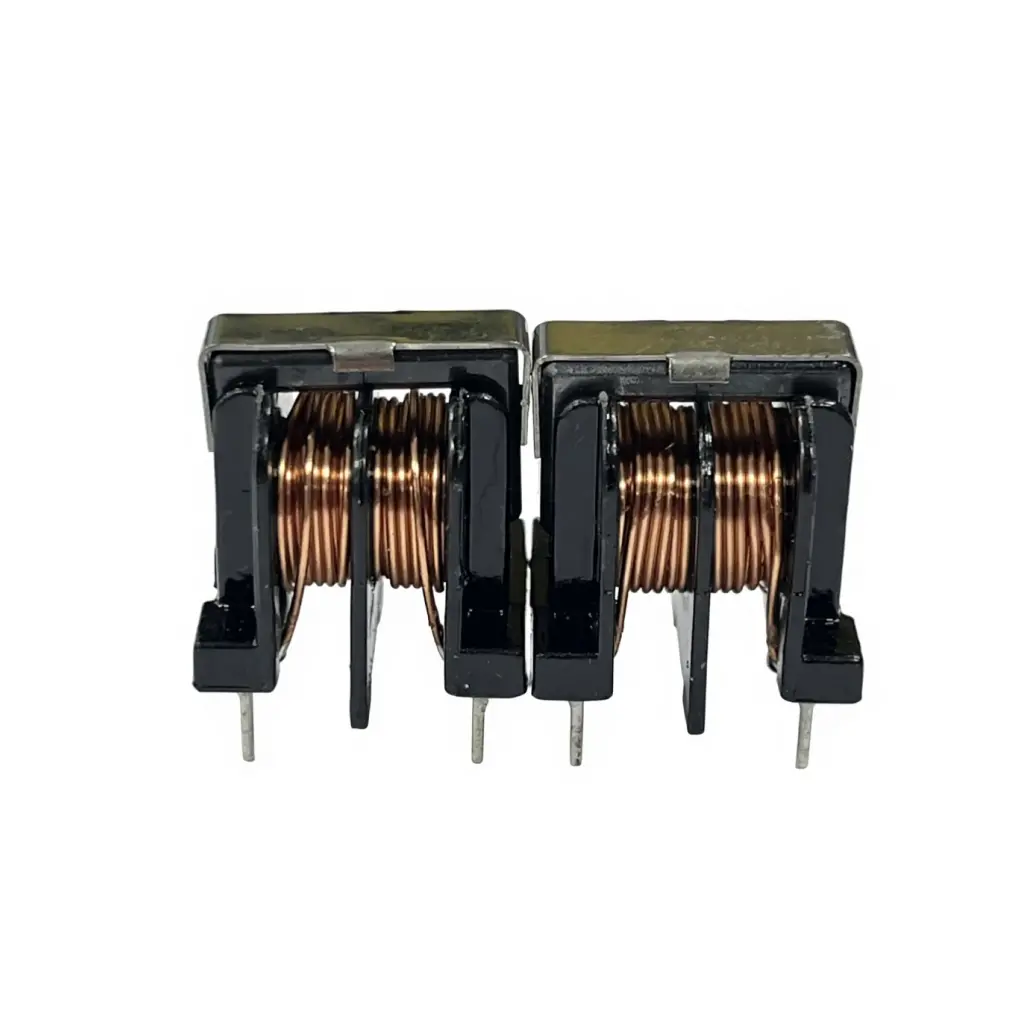
Why Copying Existing Samples Is No Longer Enough
Many traditional magnetic component projects followed a familiar workflow.
The customer supplied an existing component, requested the same specifications, and expected a direct replacement.
Although this method remains practical for maintenance projects or mature products, it is becoming less suitable for modern electronic equipment.
Several factors explain why.
Product structures are becoming more compact.
PCB designers continue reducing available installation space.
An engineer may specify that the magnetic component must fit inside a footprint smaller than 22 mm while maintaining a maximum height of 18 mm.
At the same time, the required operating current may exceed 10A.
Meeting all three requirements simultaneously demands more than selecting a standard Power Inductor. It requires balancing magnetic material, winding structure, thermal characteristics, and mechanical dimensions.
Electrical performance requirements continue increasing.
Modern switching power supplies operate at higher frequencies and greater power densities.
Designers expect better EMI suppression while minimizing power loss.
Applications involving EMI Common Mode Choke, Common Mode Filter Choke, Noise Suppression Choke, and High Frequency Common Mode Choke must satisfy electrical, thermal, and mechanical requirements simultaneously rather than individually.
System integration has become more important.
An inductor can no longer be evaluated independently.
Its interaction with nearby MOSFETs, transformers, capacitors, heat sinks, shielding structures, and PCB copper routing directly influences overall system performance.
Consequently, component selection increasingly depends on complete system analysis instead of isolated parameter comparison.
Engineering Begins with the PCB Instead of the Product Catalog
One noticeable change across modern electronics projects is that magnetic component development frequently starts from the PCB layout rather than from an existing product list.
Engineers commonly send detailed board drawings instead of ordering a standard component.
Information typically provided includes:
1. Available installation area
2. Maximum component height
3. Switching topology
4. Current waveform
5. EMC requirements
6. Target operating temperature
7. Airflow conditions
8. Nearby sensitive circuits
These details enable engineers to determine whether a Through Hole Inductor, SMD Inductor, Integrated Inductor, Surface Mounted Power Inductor, or Shielded Power Inductor provides the most appropriate solution.
For example, an AC-DC power supply may require:
· Inductance between 800 μH and 1200 μH
· Rated current around 10A
· Strong anti-interference capability
· Strict height limitation
· Stable operation during continuous load
Meeting these requirements often requires redesigning the magnetic structure instead of modifying an existing product.
Likewise, a DC-DC converter may specify only 33 μH while demanding excellent saturation characteristics, compact dimensions, and minimal interference with surrounding components.
Although the inductance value is significantly lower, the engineering challenge may actually become greater because thermal management and electromagnetic compatibility must still be optimized.
This explains why experienced Gujing Magnetic Component engineers increasingly participate in product development alongside circuit designers.
Inductor Selection Has Become a System Engineering Task
Selecting a magnetic component is no longer a simple exercise in matching inductance values.
Engineers must evaluate multiple variables simultaneously to achieve balanced performance.
Important considerations include:
· Operating frequency
· Peak current
· Saturation current
· DC resistance
· Core loss
· Temperature rise
· EMI performance
· PCB assembly method
· Mechanical vibration
· Long-term reliability
Improving one parameter often influences another.
For example, increasing copper wire diameter helps reduce resistance but may increase component size.
Using a different magnetic material can improve efficiency while affecting manufacturing cost or assembly complexity.
Adding shielding may reduce electromagnetic interference but also influence thermal dissipation.
Because these variables interact with one another, modern magnetic component development has become a multidisciplinary engineering process involving electrical design, mechanical design, thermal analysis, manufacturing engineering, and quality management.
This is particularly true for products such as High Current Power Inductor, Automotive Inductor, Vehicle Grade Common Mode Inductor, Integrated Power Inductor, and Energy Storage Inductor, where operating environments are considerably more demanding than those of conventional consumer electronics.
Manufacturing Optimization Matters as Much as Electrical Design
Even the best electrical design can encounter problems if manufacturing capability is overlooked.
Once a prototype successfully completes laboratory testing, attention quickly shifts toward mass production.
At this stage, engineers begin asking different questions.
Can the winding process remain consistent across thousands of units?
Can automatic insertion equipment improve assembly efficiency?
Will production tolerances influence EMC performance?
Can component orientation simplify PCB assembly?
These practical issues directly affect manufacturing efficiency and long-term product quality.
Experienced manufacturers therefore optimize not only magnetic design but also production processes.
For instance, winding direction may be adjusted to improve consistency.
Core assembly methods can be refined to reduce variation between batches.
Lead forming processes may be modified to improve automatic insertion performance.
Even seemingly minor details such as terminal spacing or packaging orientation can significantly influence customer production efficiency.
For companies providing Gujing Through-hole Inductor, Gujing SMD Inductor, Gujing Molded Inductor, and Gujing Automotive Inductor, these manufacturing improvements often create value that extends well beyond the electrical specifications listed in the datasheet.
Customers benefit from faster assembly, lower defect rates, improved consistency, and more predictable long-term supply.
The Role of Magnetic Component Suppliers Is Changing
Perhaps the most significant change in today’s electronics industry is the evolving relationship between equipment manufacturers and magnetic component suppliers.
In the past, suppliers primarily responded to customer drawings.
Today, customers increasingly expect engineering participation from the earliest stages of development.
Instead of simply producing a component, manufacturers are asked to recommend suitable magnetic structures, optimize Common Mode Inductance, evaluate Ferrite Common Mode Choke solutions, compare different Power Choke configurations, and support prototype validation before mass production begins.
This collaborative approach reflects the broader transformation of global manufacturing toward innovation, efficiency, and engineering-driven development.
As electronic systems continue becoming more compact, intelligent, and energy efficient, successful magnetic component design will rely less on copying existing products and more on integrating engineering knowledge with manufacturing experience.
For experienced suppliers such as Gujing Inductor, long-term competitiveness is no longer defined solely by production capacity. It is increasingly measured by the ability to transform application requirements into reliable magnetic solutions that support modern electronics throughout their entire product lifecycle.
Engineering Collaboration Is Becoming the New Standard
One of the clearest changes in today’s electronics industry is that component suppliers are becoming part of the customer’s engineering team rather than remaining only manufacturing partners.
In the past, communication between customers and suppliers was relatively simple. Purchasing departments confirmed specifications, suppliers arranged production, and products were delivered according to schedule. Engineering teams were rarely involved unless a quality issue occurred.
Today, that workflow has changed significantly.
For many new projects, engineers from both sides communicate long before the first purchase order is issued. Discussions often include PCB layout, thermal management, EMI performance, assembly methods, mechanical limitations, and future production planning.
This collaborative development model helps reduce repeated design revisions while improving the overall stability of the final product.
For example, when developing an industrial power supply, engineers may initially plan to use a standard SMD Inductor. After reviewing the PCB layout and operating current, the magnetic component supplier may recommend replacing it with a Shielded Power Inductor or an Integrated Inductor to reduce magnetic leakage and improve thermal performance.
Although the electrical parameters remain similar, the overall system becomes more reliable.
This type of engineering cooperation is becoming increasingly common across industrial automation, renewable energy equipment, communication infrastructure, and automotive electronics.
Different Applications Require Different Magnetic Design Strategies
There is no universal inductor suitable for every application. Even products with similar inductance values may require completely different structural designs depending on where they are installed.
Understanding the operating environment has become just as important as understanding the electrical specifications.
AC-DC Power Supplies
AC-DC converters usually operate directly from the mains supply and therefore face strict electromagnetic compatibility requirements.
A typical project may require:
· Strong conducted EMI suppression
· Stable Common Mode Choke performance
· High insulation reliability
· Excellent temperature stability
· Consistent long-term operation
Products such as EMI Common Mode Choke, Power Line Common Mode Choke, AC Line Common Mode Choke, and Current Compensated Choke are widely used to reduce common-mode noise before it propagates through the power system.
DC-DC Converter Systems
Compared with AC-DC power supplies, DC-DC converters place greater emphasis on efficiency, compact size, and current handling capability.
Engineers often focus on:
· Low DCR
· High saturation current
· Compact footprint
· Low temperature rise
· Stable inductance under load
Solutions including High Current Power Inductor, Low DCR Power Inductor, Flat Wire Power Inductor, and DC DC Converter Inductor are commonly selected to improve power conversion efficiency.
Industrial Automation Equipment
Industrial control systems usually operate continuously under demanding environmental conditions.
Applications such as PLC controllers, motor drives, servo systems, and variable frequency drives require magnetic components capable of maintaining stable performance despite vibration, temperature fluctuations, and electrical interference.
Depending on the installation method, engineers may choose Industrial Through Hole Inductor, Power Choke Inductor, Wire Wound Inductor, or Toroidal Inductor to achieve the required balance between electrical performance and mechanical durability.
Custom Design Is Replacing Standardized Component Selection
Another obvious trend is the increasing demand for customized magnetic components.
Instead of asking whether a catalog product is available, customers increasingly request solutions optimized for their own equipment.
Customization may involve:
1. Special inductance values
2. Unique package dimensions
3. Different terminal structures
4. Higher operating currents
5. Improved EMC performance
6. Better heat dissipation
7. Automated assembly compatibility
8. Long-term supply consistency
For experienced Gujing Inductor Manufacturer teams, customization extends beyond changing dimensions.
Engineers may recommend different magnetic core materials, optimize winding methods, redesign shielding structures, or improve lead configurations according to customer requirements.
For example, replacing a conventional ferrite structure with a different magnetic material may improve efficiency in a high-frequency application.
Similarly, modifying the winding arrangement can reduce leakage flux and improve the performance of a Custom Common Mode Choke without increasing the overall package size.
These improvements are often invisible from the outside, but they significantly influence the long-term performance of the finished equipment.
Mass Production Depends on Manufacturing Capability
Designing an excellent prototype is only the beginning of a successful project.
Once customer validation has been completed, the next challenge is maintaining identical performance during volume production.
This is where manufacturing capability becomes critical.
Reliable Inductor Manufacturing requires much more than production equipment.
Manufacturers must establish stable process control covering every stage of production, including:
· Raw material verification
· Automatic winding
· Core assembly
· Soldering process control
· Dimensional inspection
· Electrical testing
· Reliability verification
· Batch traceability
These procedures help minimize production variation while improving consistency across thousands or even millions of components.
Automation also plays an increasingly important role.
Modern SMD Manufacturing and Plug-in Manufacturing processes reduce manual variation, improve dimensional accuracy, and support higher production efficiency.
For products such as High Current Through Hole Inductor, Surface Mounted Power Inductor, Integrated Molded Inductor, and High Frequency SMD Inductor, production consistency directly influences customer assembly yields and long-term product reliability.
Emerging Industries Continue Driving Innovation
The rapid development of emerging industries continues creating new opportunities for magnetic component innovation.
Applications including renewable energy, electric vehicles, industrial automation, artificial intelligence, robotics, and high-performance computing all require increasingly advanced inductors.
For renewable energy systems, engineers frequently specify Solar Inverter Inductor, Photovoltaic Power Inductor, Energy Storage Inductor, Battery System Inductor, and Power Conversion System Inductor capable of supporting higher power density while minimizing energy loss.
Within automotive electronics, demand continues growing for Automotive Grade Inductor, AEC Q200 Inductor, Vehicle Power Inductor, Onboard Charger Inductor, and Automotive Filter Inductor designed to operate reliably under challenging environmental conditions.
Communication equipment and AI servers also require magnetic components capable of supporting high-frequency switching and compact PCB layouts.
Solutions such as Integrated Power Inductor, Low Profile Inductor, Miniature SMD Inductor, and High Frequency Inductor continue gaining popularity as equipment manufacturers pursue greater power density.
The increasing diversity of applications means that magnetic component suppliers must continually improve both engineering capability and manufacturing technology.
Looking Beyond the Datasheet
Although electrical specifications remain important, experienced engineers understand that a datasheet tells only part of the story.
Long-term reliability depends on many additional factors, including:
· Material selection
· Production stability
· Process control
· Engineering support
· Manufacturing experience
· Supply chain management
· Continuous product improvement
As electronic systems become more integrated, successful projects increasingly rely on close cooperation between product designers and component manufacturers.
The ability to discuss application requirements, recommend optimized magnetic structures, and support prototype development has become a valuable competitive advantage.
This is one reason why companies increasingly seek long-term partnerships with experienced suppliers rather than selecting components solely according to price or basic specifications.
The evolution of Common Mode Inductor selection reflects a much broader transformation occurring throughout the electronics industry.
Manufacturing is no longer driven by sample replication alone. It is increasingly based on engineering collaboration, application analysis, manufacturing optimization, and continuous innovation.
Whether developing industrial controllers, renewable energy equipment, communication infrastructure, medical devices, or next-generation automotive electronics, engineers now expect suppliers to contribute technical knowledge throughout the product development process.
For manufacturers offering products such as Gujing Common Mode Inductor, Gujing Power Inductor, Gujing Through-hole Inductor, Gujing SMD Inductor, Gujing Molded Inductor, Gujing Automotive Inductor, Gujing High Current Inductor, and Gujing Custom Inductor, this transformation represents an opportunity to create greater value through engineering expertise rather than manufacturing capacity alone.
As China’s manufacturing industry continues moving toward higher technology, greater efficiency, and stronger innovation, magnetic component development will also continue evolving. Future success will belong to suppliers capable of integrating electrical design, manufacturing experience, material science, and application engineering into complete magnetic solutions that support increasingly complex electronic systems.