 English
 Vietnamese
 Italian
 Spanish
 Thai
Thai Japanese
 Portuguese
 Korean
 Russian
 French
 German
 Polish
 Indonesian
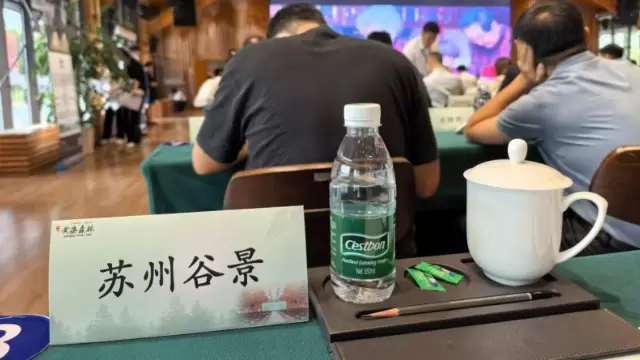
Gujing Electronics was invited to join the Aircraft Conference to jointly explore new paths for the development of low-altitude economy
Recently, Gujing Electronics was invited to attend the Joint Aircraft Conference, where it explored new paths for the development of low-altitude economy with industry leaders. From aircraft manufacturing to core component innovation, this technical dialogue is outlining a clear blueprint for the "era of air transportation".
I. United Aircraft: From Technological Breakthrough to Industrial Leadership
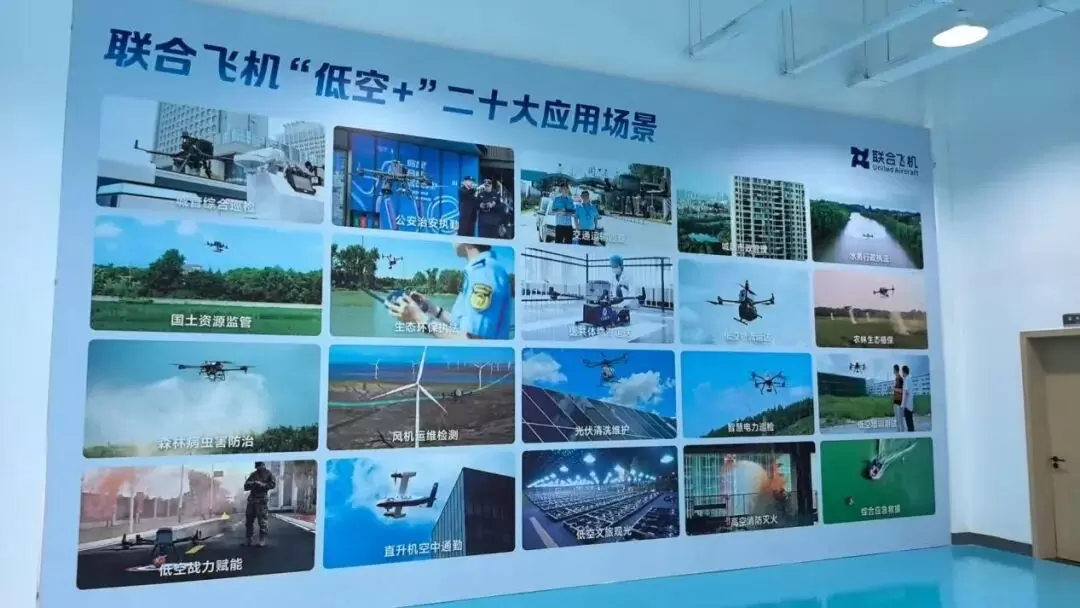
As a leader in the low-altitude economy, the development history of United Aircraft can be regarded as an epic breakthrough in China's drone technology. Its origins can be traced back to 2012, when founder Tian Gangyin led the team to develop China's first electronically controlled coaxial unmanned helicopter, TD220, filling a domestic technological gap. After more than a decade of deep cultivation, United Aircraft has now become a national-level "little giant" enterprise specializing in unique and innovative technologies. It has established a complete industrial system in Beijing, Shenzhen, and other places, and has deployed ten major application scenarios including low-altitude emergency response, medical rescue, and logistics transportation.
At the 2024 Zhuhai Airshow, the independently developed "Lan Ying R6000", the world's first 6-ton tiltrotor aircraft, made a stunning appearance. With a cruising speed of 550km/h and a load capacity of 2 tons, it realized the vision of becoming an "air car" and secured a 1 billion yuan intention order on the spot. From delivering supplies from high altitudes to urban logistics distribution, United Aircraft is using technology to reshape the industrial landscape of the low-altitude economy.
II. Low-altitude economy: The rise and opportunities of a trillion-yuan market
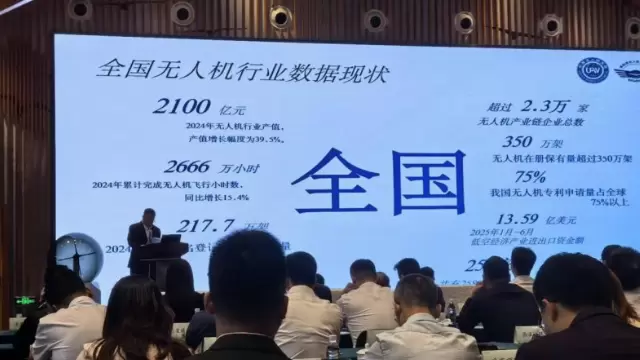
The 2025 government work report positions the low-altitude economy as the "core of new productive forces," with policy dividends continuing to be released. By the end of 2024, the scale of the core industries in the low-altitude economy nationwide had exceeded 600 billion yuan, and the Civil Aviation Administration predicts that it will soar to 1.5 trillion yuan in 2025, accelerating the opening up of a trillion-yuan market space.
Behind this explosive growth lies a triple drive of policy, technology, and demand: the National Low-altitude Economic Development Department has coordinated and planned, and various regions have accelerated the construction of over 5,000 vertical take-off and landing (VTOL) sites; 5G-A technology has achieved centimeter-level positioning, and solid-state batteries have increased battery life by 60%-90%; the practical benefits of reducing logistics and distribution costs by 60% and increasing the efficiency of cultural tourism travel by 12 times are driving the continuous expansion of application scenarios. From 300 take-off and landing points in Chongqing to the "drone cultural tourism route" in Inner Mongolia, the low-altitude economy has moved from concept to reality.
III. Inductance: The "Invisible Power Core" of Low-Altitude Aircraft
In this industrial revolution, inductors, as passive components, play a pivotal role. The power management, navigation communication, and flight control systems of low-altitude aircraft are all reliant on the stable support of inductors. They not only filter current noise to ensure flight control accuracy but also enhance power conversion efficiency to prolong endurance, serving as the "invisible guardian" of aircraft safety operation.
As drones evolve towards miniaturization, high payload, and long endurance, inductive technology is also undergoing iterative breakthroughs. In the next three years, inductors suitable for low-altitude equipment will develop in three major directions: first, "small size with high current" to achieve higher power capacity within a compact space; second, "adaptation to extreme environments" to meet complex working conditions such as high-altitude low temperatures, rainstorms, and dust storms; third, "intelligent integration" to achieve real-time status monitoring through integration with sensors. This trend is driving inductors to evolve from basic components to core technology modules of low-altitude equipment.
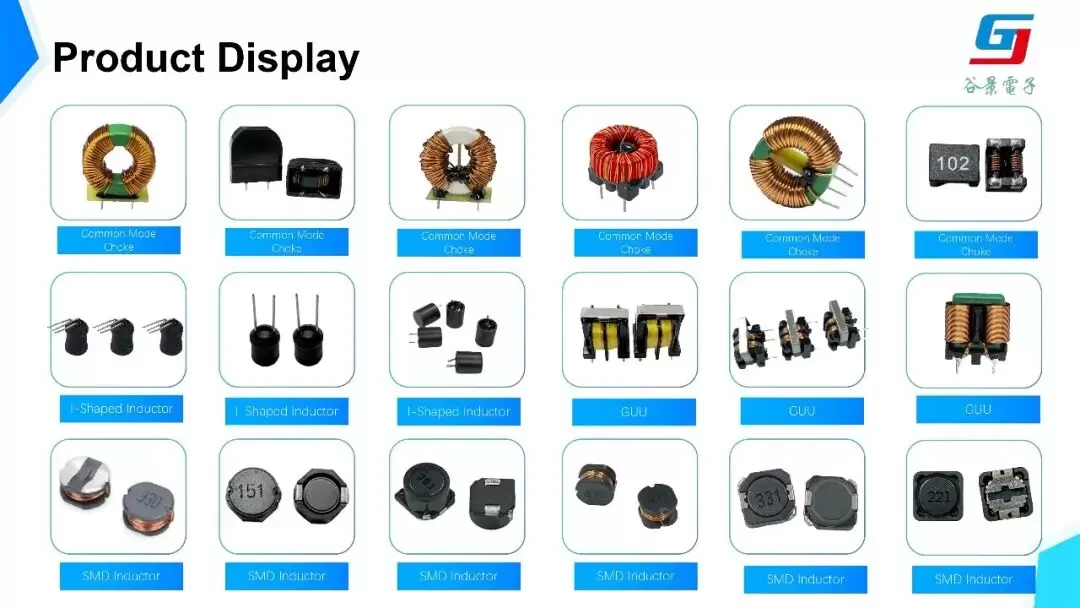
IV. Valley-view integrated inductor: the "core" choice for drones
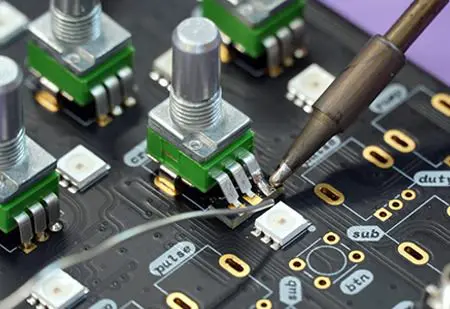
As a veteran player in the automotive-grade inductor field, Gujing Electronics is injecting new momentum into the drone industry through its technological innovations. Its integrated inductor, with three major advantages, has become the preferred accessory for companies such as United Aircraft:
Spatial adaptability: With compact packaging, it perfectly fits the installation requirements of high-density circuit boards in drones, resolving the contradiction between miniaturization and high power.
Extreme environment tolerance: With automotive-grade certification, it can operate stably in environments with temperature differences ranging from -40℃ to 125℃ and strong vibrations, making it suitable for complex operating scenarios such as high altitudes and oceans.
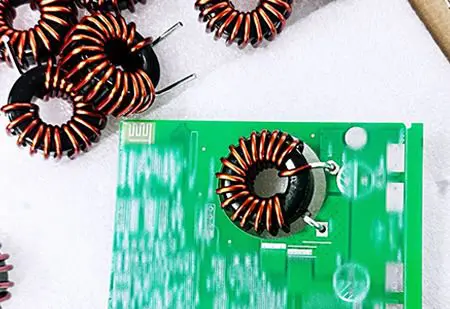
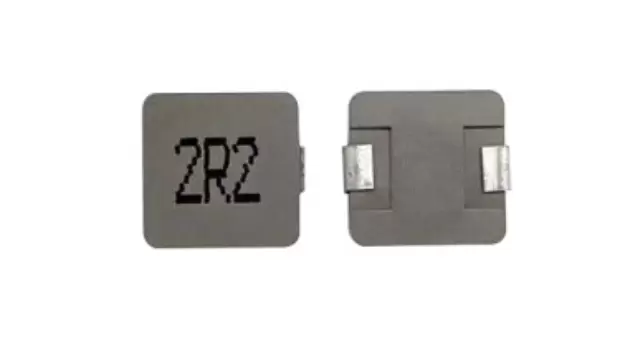
Energy efficiency breakthrough: With a 6.8uh inductance, it can carry a high current of 36A, and the power conversion efficiency is improved by 15%. Coupled with an efficient heat dissipation structure, it extends the drone's endurance by nearly 20%.
From precise spraying by agricultural plant protection drones to long-duration patrols by emergency rescue drones, Gujing inductance has achieved stable application in various types of aircraft, becoming an important guarantee for the reliability of low-altitude equipment.
V. Five-Year Plan for Gujing: Growing Together with the Low-Altitude Economy
Facing the wave of low-altitude economic development, Gujing has been well prepared and formulated a clear five-year development strategy:
1. Technological deepening and innovation: Continuously increase R&D investment, focus on the development of miniaturized, high-frequency, high-efficiency, and high-reliability inductance and module solutions suitable for low-altitude aircraft, and particularly seek breakthroughs in terms of adaptability to extreme environments such as high temperature and impact resistance.
2. Product line expansion and customized services: In response to the demands for power levels and special application scenarios in emerging market segments such as urban air mobility (UAM) and large logistics drones, we will expand the power range of our products and enhance our ability to provide customized design services to customers.
3. Industry chain collaboration and cooperation: Actively seek closer strategic partnerships with complete aircraft manufacturers and system integrators like United Aircraft, intervene from the design stage, and jointly promote the advancement of electronic system technology for low-altitude aircraft.
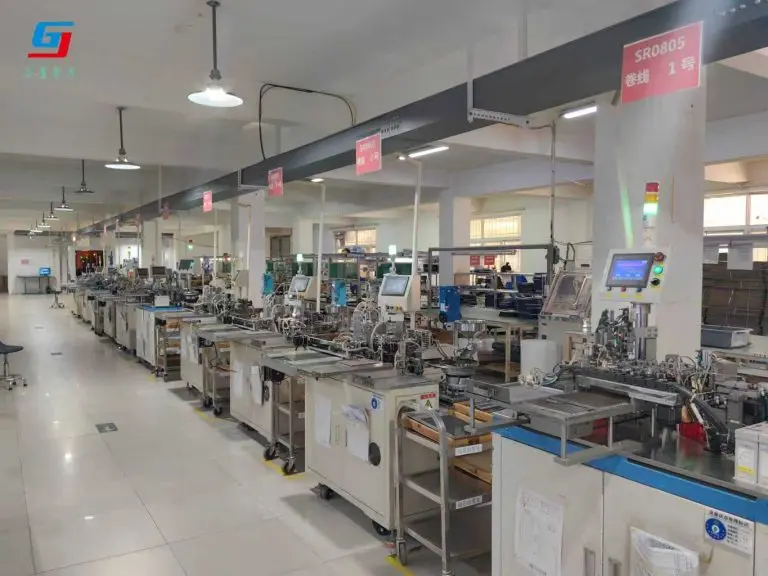
4. Quality and Capacity Enhancement: Strengthen lean production and quality management systems to ensure product consistency and reliability, while proactively planning capacity to meet the rapid growth of future market scale.
5. Brand and Standard Construction: We are committed to enhancing our brand influence in the field of low-altitude economic electronic components, actively participating in the discussion and formulation of relevant technical standards, and contributing to the healthy development of the industry.
The sky represents the eternal dream territory of humanity; the low-altitude market is a brand-new blue ocean for future economic development. GJ will uphold craftsmanship, continuously innovate, and provide safer and more reliable electronic components to ensure the safe and efficient flight of low-altitude aircraft. We look forward to collaborating with industry partners to embrace the promising future of the low-altitude economy and contribute GJ's strength to building an intelligent and three-dimensional future society!