 English
 Vietnamese
 Italian
 Spanish
 Thai
Thai Japanese
 Portuguese
 Korean
 Russian
 French
 German
 Polish
 Indonesian
 Company Profile
 News
News Success Stories
In the highly competitive electronics industry, a stable and reliable DC-DC power module is the cornerstone of an end product’s market positioning. Nevertheless, on the path to achieving “stability and reliability,” several intangible obstacles persist, with electromagnetic compatibility (EMC) issues ranking among the most prevalent and formidable challenges. Recently, a long-standing customer of Gujing encountered a bottleneck in conduction testing during the development of their new DC-DC power product. The resolution of this issue once again underscores Gujing’s core value: we offer not merely inductors, but also solutions rooted in extensive technical expertise.
Initial Success: Standard Selection Meets Basic Performance Requirements
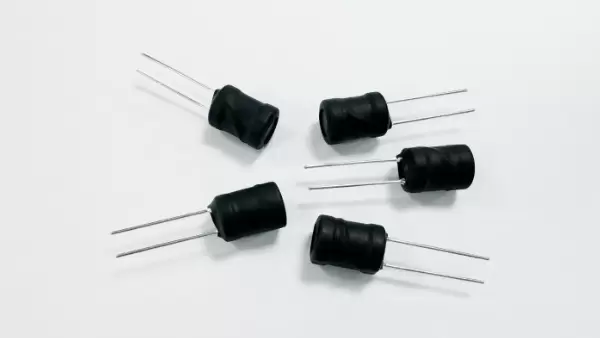
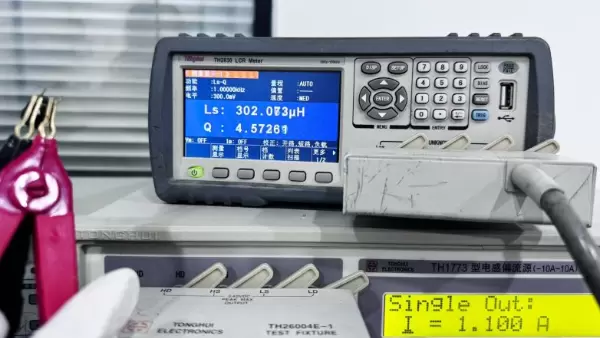
The customer’s project involved a DC-DC power module with high requirements for efficiency and stability. During the initial design phase, based on circuit requirements, the customer selected our Gujing I-shaped inductor in a 0912 package with an inductance value of 300 μH ±10% and a DC resistance (DCR) controlled between 0.398 and 0.405 Ω.
During early sample testing, the inductor demonstrated outstanding basic performance: at a current of 1.1A, the inductance variation rate was only 11.5%; at 1A, the temperature rise was controlled to 32.2°C, with a variation rate of 9.5%. Most importantly, at the customer’s circuit operating current of 0.7A, the inductor performed perfectly, with all metrics meeting design expectations. Everything seemed to be progressing smoothly toward mass production.
An Unexpected Challenge: A 5dB Gap in EMC Conducted Emission Testing
However, when the project entered the critical EMC certification testing phase, a problem arose. The customer’s power supply board failed to meet the standard during conducted emission testing. Further analysis of the test data clearly pinpointed the issue to the specific 200kHz frequency band, where the test results fell short of the standard limit by approximately 5dB.
This 5dB gap, though seemingly minor, was like an insurmountable chasm—enough to derail the entire product’s launch plan. Failing the conducted emissions test meant that the high-frequency noise generated by the power supply during operation would be fed back into the power grid via cables, interfering with other devices. The client’s technical team tried various conventional optimization methods, but with little success.
Gujing’s Intervention: From “Supplying Components” to “System Diagnostics”
Upon learning of the customer’s challenges, Gujing’s technical team quickly stepped in. We fully understood that EMC issues—especially those occurring in specific frequency bands—are often closely related to the nonlinear characteristics of components in power circuits. As a core component for energy storage and filtering, the frequency characteristics of an inductor’s core material directly determine its noise suppression performance.
Through in-depth communication with the client’s engineers, we pinpointed two critical pieces of information: “conducted immunity failure” and the “200 kHz frequency band.” This allowed us to quickly identify the root cause of the problem as the magnetic core material of the initially selected inductors. Conventional ferrite materials exhibit changes in magnetic permeability under specific frequency and current conditions, leading to degraded filtering performance and resulting in noise leakage at specific frequencies.
Targeted Solutions: Material Upgrades and Performance Optimization
Based on this assessment, the Gujiang technical team proposed a targeted solution: replacing the inductor core material. We selected the KN1 series core material—specifically developed to optimize low-to-mid-frequency EMI performance—and promptly provided samples of the same specifications (0912 package, 300μH ±10%) for validation.
This material change resulted in a significant improvement in the inductor’s performance parameters:
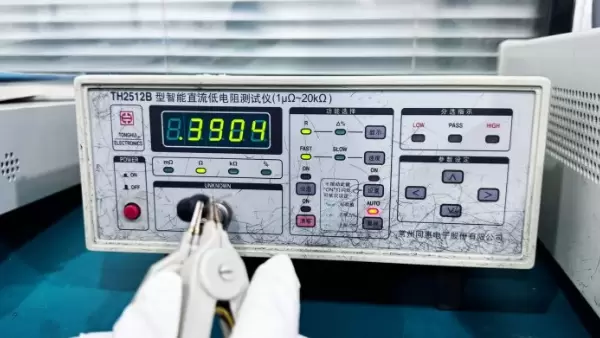
Direct Current Resistance (DCR): Reduced from the original 0.398–0.405 Ω to 0.343–0.348 Ω, which helps reduce conduction losses and improve power supply efficiency.
Current characteristics: At a current of 0.92A, the inductance variation is 11.98%; at 1.1A, the temperature rise is 32.7°C, though the rate of change has increased. This clearly indicates that the KN1 material has found a new balance between frequency response and DC bias characteristics, one that is more conducive to suppressing 200kHz noise.
Successful Validation: A 4dB Improvement and the Final Victory
Upon receiving the new samples, the customer immediately conducted board-level testing. The results were encouraging: replacing the inductors with KN1-material components significantly improved the power supply board’s conducted emissions in the 200kHz frequency band, reducing them by a full 4dB compared to before!
This critical 4dB improvement greatly alleviated the customer’s EMC challenges. Subsequently, building on this foundation and in conjunction with board-level layout adjustments, the customer’s team replaced a single resistor package to perform final fine-tuning. Ultimately, they successfully resolved the excessive conducted emissions issue, and the product passed certification without a hitch.
Summary
In this case, the inductor itself served as the “medium” for solving the problem, but the true value lies in Gujing’s ability to deeply integrate off-the-shelf components with the client’s specific application scenarios to provide customized solutions. We firmly believe that behind every small inductor lies the success or failure of the client’s product. This is precisely the philosophy that Gujing has always upheld: “The inductor is merely a product medium; solving the various problems encountered on the board is the soul of Gujing.”