 English
 Vietnamese
 Italian
 Spanish
 Thai
Thai Japanese
 Portuguese
 Korean
 Russian
 French
 German
 Polish
 Indonesian
What OEM Buyers Should Verify Before Choosing an Inductor Manufacturer
Choosing the right inductor manufacturer directly shapes product quality, cost, and supply chain stability. A reliable partner delivers consistent inductors that meet design specifications. A poor choice creates defects, delays, and compliance failures.
OEM buyers must verify several critical areas before committing. These include certifications, manufacturing and technical capabilities, testing procedures, supply chain reliability, cost transparency, communication, and reputation. Each area demands documented evidence, not verbal assurances.
A structured verification checklist protects buyers from hidden risks. Automotive programs require IATF 16949 certification and AEC-Q200 compliant inductors. Each inductor must pass rigorous testing. Automotive buyers also need inductors rated for extreme temperatures. Without proper verification, buyers face costly recalls and production stoppages.
Quality Certifications of an Inductor Manufacturer
ISO 9001, IATF 16949, and AEC-Q200 Components
Certification scope matters more than the certificate itself. An ISO 9001 badge establishes a baseline quality management system. It applies broadly across industries. An IATF 16949 certificate, however, signals something far more specific. That standard governs automotive production. Buyers sourcing for vehicle platforms must confirm iatf 16949 compliance before placing orders. Medical device programs require ISO 13485 instead. A general certificate cannot substitute for the industry-specific one.
The aec-q200 standard defines stress-test requirements for passive components. Automotive-grade inductors must pass these tests. Buyers should request actual test reports, not just claims of compliance. A supplier that truly produces aec-q200 components will provide documented results for temperature cycling, moisture resistance, and mechanical shock. These reports confirm that the parts meet the rigorous demands of automotive applications.
Gujing holds IATF 16949 certification as an automotive-grade inductor manufacturer. This credential demonstrates that the company's iatf 16949 compliant manufacturing processes meet the stringent requirements of automotive customers. Buyers evaluating automotive-certified magnetics should treat this certification as a minimum threshold, not a differentiator.
RoHS, UL Recognition, and Industry-Specific Standards
Regulatory compliance extends beyond quality management systems. RoHS restrictions limit hazardous substances in electronic products. Buyers should obtain lab reports that verify compliance for every inductor model under consideration. Verbal assurances carry no weight during an audit.
UL recognition provides another layer of verification. For common mode chokes and other inductors used in industrial power supplies, buyers should check UL yellow cards and the Product iQ database. These resources confirm the specific material grades used in construction. The table below summarizes key requirements.
Requirement | Applies To | Key Detail | Consequence of Non-Compliance |
UL 94 V-0 flame rating | Commercial power products, including bobbins used in common mode chokes and inductors | Rating is mandatory, not optional | Non-UL 94 V-0 bobbins invalidate full-system certification |
UL yellow card verification | Material selection for bobbins and inductors | Request UL yellow card excerpts, not just "UL listed" claims; verify specific grade | Unverified grades may lack long-term thermal aging data at 130°C |
Regulatory standards | EU (EN 62368-1), US (UL 62368-1), China (GB 4943.1) | Flame retardancy is a regulatory requirement | Non-compliant bobbins invalidate full-system certification even if other parts comply |
These requirements apply directly to EMI common-mode filters, industrial PLC power supplies, and switching power supply transformers. A supplier that understands these contexts will provide the right documentation without prompting. Buyers should verify that the manufacturer's quality control system captures these standards at every production stage. This diligence protects product reliability and ensures that delivered inductors meet all key specifications. A manufacturer that cannot produce these documents introduces compliance risk that no unit price can offset.
Manufacturing and Technical Capabilities
Production Capacity, Automation, and Customization
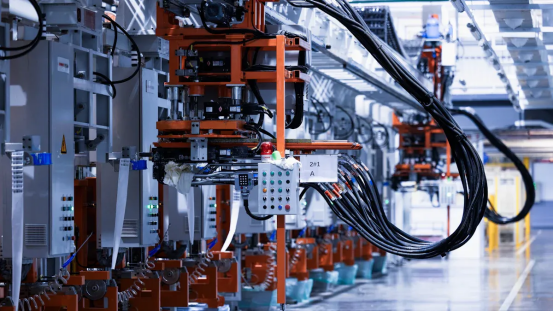
Production capacity reveals whether an inductor manufacturer can scale with an oem program. Buyers should examine floor space, staff count, and equipment before signing a contract. A facility of 13,000 square meters with more than 300 staff supports steady output. Automation level matters even more. Automated winding machines hold consistent winding tension, which directly supports stable inductance values. Precision molding presses apply high-pressure, zero-tolerance molding for uniform component geometry. AGV handling systems reduce process variability through strict material control. Batch testing equipment verifies low loss and high SRF performance for every lot.
Equipment / Process Area | Contribution to Consistent Inductance Tolerance |
Automated winding machine | Maintains consistent winding tension, which directly supports stable inductance values |
Precision molding press | Uses high-pressure, zero-tolerance molding to ensure uniform and reliable component geometry |
AGV handling system | Provides strict material handling and full automation, reducing process variability |
Batch testing and QC equipment | Tests every batch to verify low loss and high SRF performance, confirming inductance consistency |
Gujing exceeds 90% automation across its production lines. This level of automation supports quality consistency and stable delivery lead times. Customization capability separates capable suppliers from catalog vendors. Buyers of non-standard inductors should confirm magnetic core material matching. Gujing maintains an inventory of more than 20,000 magnetic core types and brings 23+ years of OEM and ODM experience to custom oem projects.
Automotive DC-DC Converter Inductor Design Support
Automotive power electronics demand rigorous design verification. Buyers pursuing automotive dc-dc converter inductor design should audit the manufacturer's R&D team, simulation tools, and prior design cases. Simulation shortens the path from concept to hardware. Two tools appear often in switched-mode power supply work. Würth Elektronik's REDEXPERT provides inductor loss and temperature-rise models, including frequency-dependent AC losses. STMicroelectronics' eDesignSuite configures the converter controller and topology for system-level validation.
· REDEXPERT models inductor loss and temperature rise, including frequency-dependent AC losses, for realistic operating conditions.
· eDesignSuite configures the converter controller and topology, enabling system-level validation in buck converters used in automotive applications.
· Both tools help engineers size output inductors, check ripple and saturation margins, and compare inductor series before prototyping.
Suppliers serving automotive dc-dc converter inductor design also publish simulation models across circuit, electromagnetic, and thermal categories. Murata, for example, supports LTspice, Ansys Electronics Desktop Circuit, AWR Design Environment, Virtuoso Studio RF, OrCAD X Capture, PSpice, Spectre, PathWave ADS, PathWave Genesys, SIMetrix/SIMPLIS, and HSPICE for circuit simulation. Field simulation covers Ansys HFSS, Clarity 3D Solver, ADS RFPro, and Hermes 3D. Thermal simulation relies on Ansys Icepak. These tools support circuit-level, electromagnetic, and thermal verification of inductors in power converters.
Automotive dc-dc converter inductor design also depends on thermal management. Engineers must confirm saturation margins and ripple behavior under real load profiles. A manufacturer with deep automotive dc-dc converter inductor design experience will supply simulation data, not just datasheets. Buyers should request prior design cases and check whether the R&D team can match core materials to key specifications. Gujing provides one-stop technical services covering design, selection, testing, and application. This support helps buyers align automotive dc-dc converter inductor design work with compliance requirements early. Strong automotive dc-dc converter inductor design capability reduces redesign cycles and protects program schedules. Buyers who verify these capabilities before ordering avoid costly surprises during production.
Testing, Inspection, and Inductor Selection Support
In-House Testing, LCR Meter, and Traceability
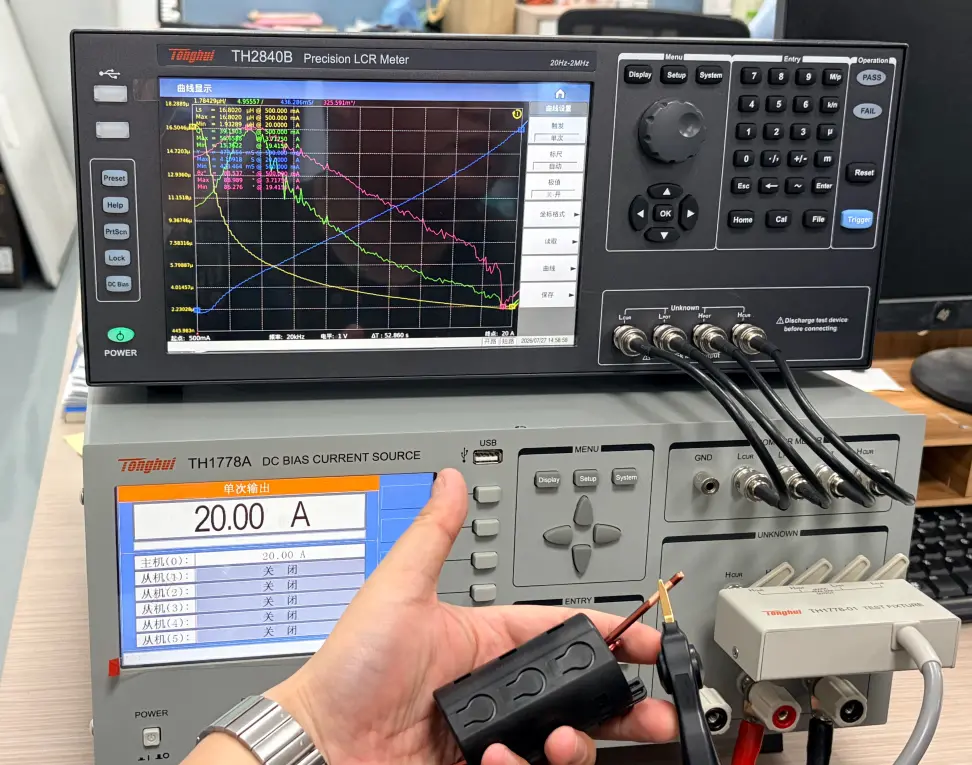
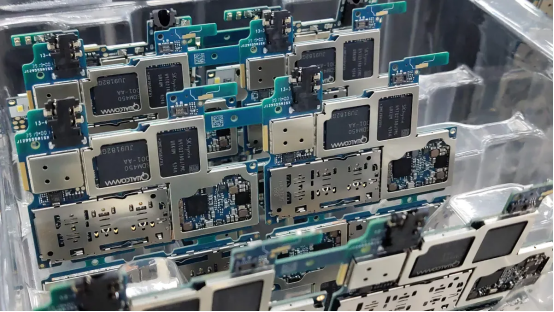
A capable inductor manufacturer maintains full in-house testing capabilities. The LCR meter serves as the primary instrument for inductance, capacitance, and resistance characterization. Buyers should confirm that the supplier uses this equipment for every production lot. The testing protocol must cover the inductance value at the exact switching frequency. If the reading deviates by 2%, technicians adjust the turns count. The saturation current rating requires a specific test. Technicians increase current until the inductance value drops 20%. This measured value must exceed the worst-case current spike in the application. The dc resistance check uses a four-wire Kelvin clip. Any unit exceeding the specification by even 0.5 mΩ receives a flag.
Traceability documentation connects every delivered inductor to its production lot. Buyers should verify that the manufacturer performs full performance inspection and maintains records for each batch. The table below shows a typical sampling plan.
Stage | Sampling Requirement | Tests Performed |
Prototype | Every piece (100%) | Full electrical testing |
Production | 5% random sample | Full electrical testing (inductance, saturation current, DCR) |
Production | 100% | Visual inspection and DCR testing |
Failure handling | Reset counter and retest whole lot | If any single unit fails |
This structured approach ensures consistency between samples and delivered products. A supplier that skips these steps introduces risk into every order.
Sample Sealing and Design-in Assistance
Inductor selection demands more than a catalog review. Buyers should check whether the manufacturer offers one-stop technical service. This support covers demand alignment, scenario analysis, scheme design, sample materials, and application support. The process begins with early-stage demand alignment. Engineers then analyze the application scenario and propose a scheme design. The manufacturer provides sample materials for evaluation. Sample sealing locks the approved configuration. This service guarantees that delivery products match the sealed samples. Buyers gain protection against material substitutions or process drift.
Gujing provides sample sealing and one-stop technical services covering design, selection, testing, and application. The company's service process includes material confirmation, strict production control, full performance inspection, and quick response. This closed-loop approach helps buyers align electrical requirements with key specifications before committing to volume orders. For automotive programs, thermal management and compliance checks integrate into the same workflow. Buyers who leverage this support reduce redesign cycles and avoid costly delays.
Supply Chain and Delivery Reliability
Material Sourcing, Lead Times, and Inventory
Material sourcing stability determines whether an inductor manufacturer can maintain production without interruption. Buyers should audit the supplier's magnetic core supply agreements and inventory policies for the automotive inductors they source. Deep inventory lets a manufacturer react quickly to demand changes. Gujing maintains an extensive inventory of more than 20,000 magnetic core types. This resource lets the company match material quality to design requirements without waiting for procurement cycles.
Lead times depend on automation and inventory depth. High automation reduces manual handling and standardizes production flow. Gujing's production lines exceed 90% automation. This capability supports stable delivery lead times across order volumes. Buyers should review documented lead-time records. A supplier that consistently meets quoted lead times for bulk inductors reduces supply chain risk. Inventory management protects against raw material shortages. Global disruptions affect magnetic materials, copper wire, and finished inductors. A manufacturer with buffer stock can continue production when market supply tightens.
MPN Validation and NCNR Order Integrity
Non-cancelable, non-returnable (NCNR) orders demand absolute part-number accuracy. Buyers must confirm character-by-character MPN validation before placing the order. A single typo delivers the wrong part. This error wastes time and money since NCNR orders prohibit cancellation. Global buyers face additional risk from regional part-number variants. The same part may carry different manufacturer part numbers across distribution channels. Buyers should verify pinout and terminal orientation for each of the ordered inductors. Package compatibility with the PCB footprint also requires confirmation.
Part-number verification should always occur before order submission. Buyers compare the datasheet, order confirmation, and product label. Any mismatch requires immediate correction. Gujing applies strict production control and full performance inspection for every order. The company's quick-response process catches discrepancies early. This diligence prevents production line stoppages in automotive programs. A wrong inductor in an automotive power module triggers rework and potential compliance failures. Confirming part numbers protects schedules, especially for custom inductors. This verification step costs minutes but saves weeks of delay. Serious buyers treat MPN validation as a mandatory gate in procurement.
Cost, Power Inductor Selection, and Reputation
Pricing Transparency and Total Cost Analysis
Unit price alone misleads buyers during inductor selection. A transparent manufacturer breaks down tooling, testing, logistics, and compliance costs before quoting. Buyers should request a full cost structure for each power inductor selection under review. Hidden fees surface later as budget overruns. A total cost analysis extends beyond the invoice. Buyers must weigh engineering support, reliability data, stable supply, raw-material risk, multi-sourcing options, and forward demand communication for critical series.
· Engineering support and reliability data
· Stable supply and raw-material risk
· Multi-sourcing considerations to reduce exposure to a single supplier's pricing and allocation decisions
· Forward demand communication for critical series so suppliers can plan capacity and allocation
A checklist that aligns technical and commercial requirements prevents costly surprises. Buyers should confirm the current rating, inductance value, and tolerance against the application before signing. Gujing supports this process with one-stop technical services covering design, selection, testing, and application.
Communication, References, and Customer Support
Responsiveness reveals how a manufacturer treats buyers after the order. Slow replies during evaluation signal slow replies during production. Buyers should test communication channels before committing. Technical support quality matters equally. A supplier that answers inductor questions with datasheets alone falls short. Strong support means engineers who explain trade-offs and propose alternatives.
Customer references and service case history provide independent proof. Gujing employs more than 300 staff and has served over 3,500 service cases. The company's quick response and counter-reform closed loop keep automotive programs on schedule. Buyers should ask for references from similar applications. A manufacturer serving automotive, industrial, and medical customers demonstrates broad quality and compliance experience. Verified communication and documented references build the trust that long-term partnerships require.
OEM buyers who verify certifications, manufacturing capability, testing, supply chain reliability, cost transparency, communication, and reputation avoid defects, delays, and hidden costs. These checks apply to every order of inductors. One missing document introduces risk no unit price can offset. A structured review protects budgets and schedules.
Buyers should treat this checklist as a working tool, not a formality. Apply it before committing to any supplier of inductors. Confirm automotive certifications, request test reports for these inductors, and validate part numbers. Thorough compliance checks prevent recalls and production stoppages. Verified trust forms the foundation of lasting partnerships. Suppliers who earn that trust become long-term allies in every automotive program involving inductors.