English
 Vietnamese
 Italian
 Spanish
 Thai
 Japanese
 Portuguese
 Korean
 Russian
 French
 German
 Polish
 Indonesian
744314150 Compatible Inductor Review with Gujing GSHM0605MT1R5
For buyers reviewing Würth Elektronik 744314150, Gujing GSHM0605MT1R5 provides a 1.5 µH option backed by recorded robotics and rail-transit application experience. The comparison shows differences in package width and depth, resistance and current figures, so the starting point is a defined circuit requirement rather than a blanket compatibility claim.
We can discuss this candidate with your engineering team and support the move from specification matching to samples and application review. Share the current profile, available PCB space and procurement objective so the first discussion addresses the constraints that matter to your project.
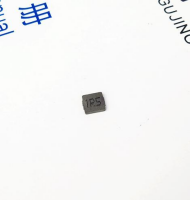
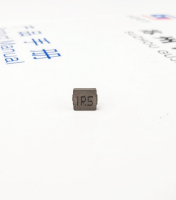
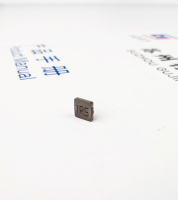
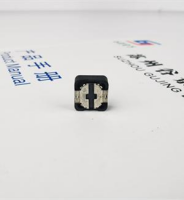
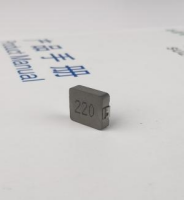
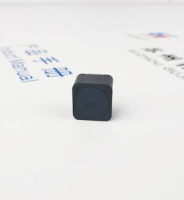
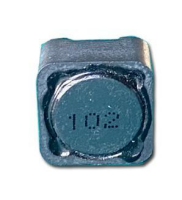
Gujing GSHM0605MT1R5 product views
GSHM0605MT1R5 vs. 744314150: 1.5 µH Specification Comparison
Parameter | Gujing GSHM0605MT1R5 | Würth Elektronik 744314150 |
|---|---|---|
Inductance | 1.5 µH ±20% | 1.5 µH ±20% |
Dimensions | 7.3 × 6.6 × 4.8 mm | 7.0 × 6.9 × 4.8 mm |
DCR as listed | 15 mΩ max. | 4.78 mΩ |
Isat at stated 30% criterion | 9 A | 11 A |
Irms at stated 40°C rise | 18 A | 13 A |
Comparison figures are from Gujing’s technical proposal. Confirm the current approved specifications and test conditions when agreeing sample acceptance.
Discuss this pairing with our team and request the proposed specification, sample arrangements and a quotation.
Evaluating PCB Fit, DCR and Current Requirements
The listed Gujing package is 7.3 × 6.6 × 4.8 mm versus 7.0 × 6.9 × 4.8 mm for the reference. The common height may be useful, but different width and depth require a terminal and clearance check. For an existing assembly, establish mechanical suitability before assuming the part can be fitted without a change.
The comparison lists 9 A saturation current for Gujing versus 11 A for the reference, and thermal-current figures of 18 A versus 13 A. DCR is 15 mΩ maximum for Gujing and 4.78 mΩ for the reference without the same limit description. A higher listed thermal figure does not remove the need to review saturation and loss. The purchasing decision should follow the operating profile and agreed test methods.
GSHM0605MT1R5 Robotics and Rail-Transit Application Records
Our record describes a Tianjin robotics customer using GSHM0605MT1R5 in a dexterous-hand application from 2017 for this reference pairing. Consistency and stability were important to the customer. The record describes repeated testing, including destructive tests during trial production, with no performance problems reported in those recorded tests. No test protocol or numerical results are published in the case text.
A second record describes a Beijing rail-transit switching application using the pairing from 2018. Gujing reported that performance and current margin met the customer’s needs during batch trial testing. Both examples support a discussion about application-specific evaluation. For your design, agree the relevant load, assembly and reliability checks, then use the results to decide whether the candidate should enter the approved BOM.
Specification Review, Sample Testing and Production Approval
Selection and specification review
For this 1.5 µH option, identify the peak-current requirement first, then compare inductance under load, winding temperature and physical fit. If the project needs a different balance, discuss the target rather than selecting the largest current figure in the table.
Samples and application feedback
Discuss sample quantities and the tests needed for your circuit. Share measured temperature rise, electrical results or application issues with our technical team so we can review the candidate and, where appropriate, discuss material or design adjustments.
Trial production and order confirmation
Before production release, agree the specification, drawing and approved sample with your team. Confirm packaging, inspection requirements, order quantity and delivery schedule in the commercial discussion. A second-source evaluation can then progress through your own approval process.
744314150 Candidate Evaluation: Frequently Asked Questions
Can the 18 A thermal figure replace a peak-current check?
No. The listed saturation figure is 9 A under the stated criterion. Establish the required inductance at your peak current and review it separately from the thermal-current value.
Do the robotics tests prove a particular reliability standard?
The case describes customer testing without publishing the full procedure or results. Share the standard and evidence your project requires so the available documentation and any further testing can be discussed.
What should be reviewed before quoting this for an existing board?
Confirm the terminal drawing, available width and depth, current profile and approved DCR limits. A quotation against an agreed specification is more useful than a price based only on the reference number.
How are sample cost, MOQ and delivery confirmed?
They are confirmed for the agreed specification, sample or order quantity and packaging requirements. Include your target delivery date when requesting a quotation; historical case schedules are not current order commitments.
Request GSHM0605MT1R5 Samples and a Quotation
Send the 744314150 datasheet, PCB footprint and clearances, expected peak and RMS current, operating frequency and thermal limits. Add the quantity, delivery target and any required reliability tests. We can review GSHM0605MT1R5, discuss sample evaluation and prepare a quotation against the proposed specification.
Request GSHM0605MT1R5 Samples & a Quote
Würth Elektronik and its reference number identify the product being compared. No affiliation or endorsement is implied.